Introduction
In modern industrial and civil water supply systems, constant pressure water supply technology is highly favored for its ability to stabilize water pressure, improve water quality, and effectively save energy. Tianchuan frequency inverters, as high-performance water supply control devices, are widely used in various water supply scenarios. However, during use, users may encounter situations where the frequency inverter displays the SLP code, which is often related to the sleep function in constant pressure water supply mode. This article will delve into the meaning of the SLP code on Tianchuan frequency inverters, the reasons for its appearance, and optimization strategies to help users better understand and utilize frequency inverters for efficient and energy-saving constant pressure water supply.
1. Explanation of the SLP Code
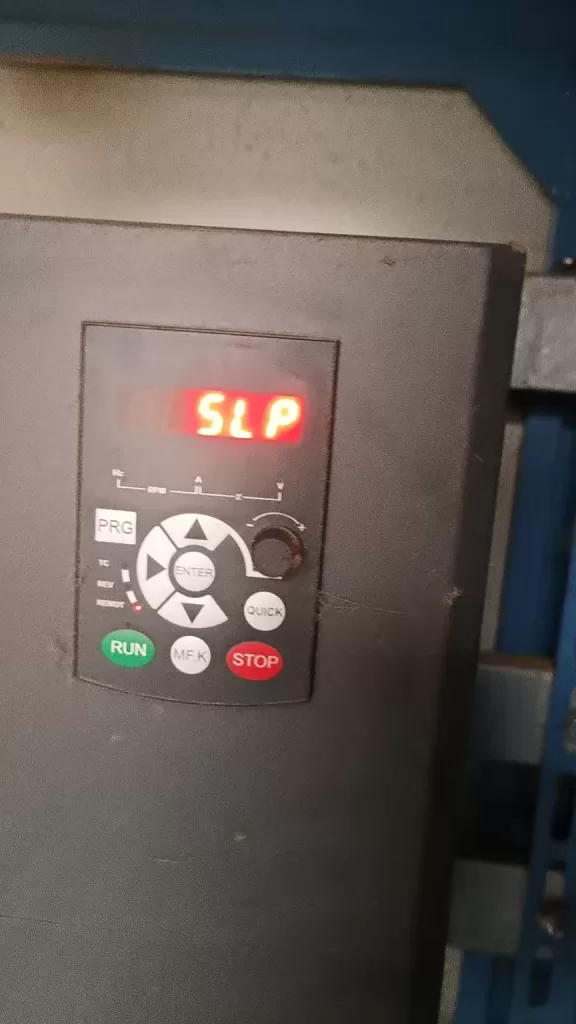
1.1 Basic Definition of the SLP Code
The SLP code is a status indicator on Tianchuan frequency inverters in constant pressure water supply mode, representing that the frequency inverter is currently in a “sleep” state. When the water supply system pressure reaches the set value and there is no water demand for a certain period, the frequency inverter automatically reduces the operating frequency or even stops to reduce unnecessary energy consumption. At this time, the SLP code is displayed on the frequency inverter’s operation panel, indicating that the system has entered an energy-saving mode.
1.2 Energy-Saving Principle of the Sleep Function
The sleep function is an important energy-saving technology for frequency inverters in constant pressure water supply systems. By continuously monitoring the system pressure, when the pressure reaches the set value and there is no water demand for a certain period, the frequency inverter automatically adjusts its operating state, reducing the motor’s running time and thus lowering electricity consumption. This intelligent adjustment mechanism not only helps save energy but also extends the equipment’s service life and reduces maintenance costs.
2. Causes of the SLP Code Appearing
2.1 System Pressure Reaches the Set Value
When the water supply system pressure reaches the target pressure value set by the frequency inverter and there is no water demand for a certain period, the frequency inverter automatically triggers the sleep function and displays the SLP code. This is a normal energy-saving phenomenon, indicating that the system is operating effectively.
2.2 Improper Setting of Sleep-Related Parameters
The conditions for the frequency inverter to enter the sleep state are not only related to the system pressure but also influenced by parameters such as sleep frequency and sleep delay time. If these parameters are set unreasonably, it may cause the frequency inverter to frequently enter or exit the sleep state, affecting system stability and energy-saving effects.
2.3 Pressure Sensor Failure or False Alarms
The system pressure sensor is an important basis for the frequency inverter to determine whether to enter the sleep state. If the sensor fails or is improperly set, it may cause the frequency inverter to misjudge the system pressure, leading to incorrect display of the SLP code or inability to enter the sleep state normally.
2.4 System Leakage or Changes in Water Consumption Patterns
System leakage or changes in user water consumption patterns may also cause the frequency inverter to frequently display the SLP code. For example, pipeline leakage can cause the system pressure to continuously drop, preventing the frequency inverter from maintaining a stable sleep state. Sudden changes in user water consumption patterns, such as a large amount of water consumption in a short period, may also prevent the frequency inverter from adjusting its operating state in a timely manner.
3. Optimization Strategies for SLP Code Issues
3.1 Reasonable Setting of Sleep-Related Parameters
3.1.1 Sleep Frequency
The sleep frequency is the frequency threshold for the frequency inverter to enter the sleep state. Based on the actual needs of the system, set the sleep frequency reasonably to avoid it being too high or too low. An excessively high sleep frequency may prevent the frequency inverter from effectively saving energy, while an excessively low sleep frequency may affect the system’s response speed. For example, increasing the sleep frequency from the original 20Hz to 25Hz can ensure that the frequency inverter exits the sleep state only after the system pressure has stabilized and dropped.
3.1.2 Sleep Delay Time
The sleep delay time is the time parameter for the frequency inverter to enter the sleep state after reaching the sleep frequency and experiencing no water demand for a certain period. Based on the system’s water consumption habits, set the sleep delay time reasonably to prevent the frequency inverter from frequently entering the sleep state due to short-term absence of water demand. For example, extending the sleep delay time from the original 30 seconds to 1 minute can improve system stability.
3.1.3 Water Supply Sleep Tolerance
The water supply sleep tolerance is the tolerance range for the system pressure near the set value. Appropriately increasing the water supply sleep tolerance can reduce the frequency of the frequency inverter entering and exiting the sleep state due to pressure fluctuations, improving system stability. For example, increasing the water supply sleep tolerance from the original 5% to 10% can effectively reduce the frequency inverter’s frequent adjustments.
3.2 Inspect and Calibrate the Pressure Sensor
Ensure that the system pressure sensor is working properly and can accurately reflect the system pressure. Regularly calibrate and maintain the pressure sensor to prevent the frequency inverter from misjudging the system pressure due to sensor failure or false alarms. If abnormal sensor readings are detected, replace or adjust the sensor promptly.
3.3 Optimize System Design and Maintenance
3.3.1 Check for System Leakage
Regularly inspect the water supply system for leakage and promptly repair any leaks to ensure stable system pressure. Leakage not only causes the frequency inverter to frequently display the SLP code but also results in water waste and equipment damage. Through regular inspections and maintenance, leakage issues can be effectively prevented.
3.3.2 Analyze Water Consumption Patterns and Adjust Strategies
Based on changes in user water consumption patterns, adjust the operating strategy of the frequency inverter in a timely manner. For example, start the frequency inverter in advance before peak water consumption periods to ensure stable system pressure. During low water consumption periods, reasonably set sleep parameters to achieve energy-saving operation. By intelligently analyzing water consumption patterns, the operating efficiency of the frequency inverter can be further optimized.
3.4 Upgrade Frequency Inverter Software and Firmware
With continuous technological advancements, frequency inverter manufacturers continuously optimize product software and firmware to improve system stability and energy-saving effects. Regularly check and upgrade the software and firmware versions of the frequency inverter to ensure that the equipment is always in the best operating state. Read the upgrade instructions carefully before upgrading to ensure a smooth process.
4. Practical Case Analysis
4.1 Case Background
A residential community uses a Tianchuan frequency inverter for constant pressure water supply control. Recently, users have reported that the frequency inverter frequently displays the SLP code and sometimes fails to respond promptly to water demand. Preliminary inspections revealed that the system pressure sensor is working properly, but the sleep-related parameters are set conservatively.
4.2 Problem Analysis
- Low Sleep Frequency Setting: The frequency inverter exits the sleep state as soon as the system pressure drops slightly, preventing effective energy savings.
- Short Sleep Delay Time: The frequency inverter enters the sleep state shortly after a brief absence of water demand, affecting the system’s response speed.
- Small Water Supply Sleep Tolerance: Slight pressure fluctuations cause the frequency inverter to frequently enter and exit the sleep state.
4.3 Solution
- Adjust Sleep Frequency: Increase the sleep frequency from the original 20Hz to 25Hz to ensure that the frequency inverter exits the sleep state only after the system pressure has stabilized and dropped.
- Extend Sleep Delay Time: Extend the sleep delay time from the original 30 seconds to 1 minute to prevent the frequency inverter from frequently entering the sleep state due to short-term absence of water demand.
- Increase Water Supply Sleep Tolerance: Increase the water supply sleep tolerance from the original 5% to 10% to reduce the frequency of the frequency inverter adjusting its operating state due to pressure fluctuations.
4.4 Implementation Effect
After implementing the above adjustments, the frequency inverter’s display of the SLP code significantly decreased, and the system’s response speed improved, enhancing the user’s water consumption experience. At the same time, since the frequency inverter can effectively enter the sleep state during periods of no water demand, the overall energy consumption of the system also decreased.
5. Conclusion and Outlook
5.1 Conclusion
The appearance of the SLP code on Tianchuan frequency inverters is a normal energy-saving phenomenon in constant pressure water supply mode. However, if the frequency inverter frequently displays the SLP code or fails to respond promptly to water demand, it may be related to factors such as improper setting of sleep-related parameters, pressure sensor failure, or system leakage. By reasonably setting sleep parameters, inspecting and calibrating the pressure sensor, optimizing system design and maintenance, and upgrading frequency inverter software and firmware, SLP code-related issues can be effectively resolved, achieving efficient and energy-saving constant pressure water supply.
5.2 Outlook
With the continuous development of intelligent water supply technology, future frequency inverters will become more intelligent and automated. By introducing advanced control algorithms and sensor technologies, frequency inverters will be able to more accurately judge system status and user demand, achieving more precise and efficient constant pressure water supply control. At the same time, with the popularization and application of IoT technology, frequency inverters will also realize functions such as remote monitoring and fault diagnosis, further improving the reliability and maintenance efficiency of water supply systems. Users can expect more intelligent, convenient, and energy-saving water supply solutions, bringing more convenience and benefits to daily life and industrial production.