
Introduction
Liposomes have become one of the most important nanoscale delivery systems in modern biomedical research. Due to their unique structure, consisting of one or more phospholipid bilayers surrounding an aqueous core, liposomes are widely used in pharmaceutical development, drug delivery systems, vaccine research, gene therapy, cosmetics, and nanotechnology applications.
However, the performance of liposome-based products strongly depends on their physical characteristics, especially particle size distribution, membrane structure, encapsulation efficiency, and stability. During the preparation process, liposome suspensions usually contain vesicles with a wide range of sizes, from several tens of nanometers to several micrometers. Such size variation can negatively influence experimental repeatability and biological performance.
To solve this problem, extrusion technology is commonly applied to reduce particle size and achieve a more uniform liposome population.
The Avestin LiposoFast™ LF-1 Liposome Extruder is a classic laboratory-scale manual extrusion device designed specifically for small-volume liposome preparation. It uses controlled extrusion through polycarbonate membranes to transform heterogeneous multilamellar vesicles into more uniform large unilamellar vesicles (LUVs).
Unlike large-scale high-pressure homogenizers, the LiposoFast™ LF-1 does not require electricity, complicated control systems, or large sample volumes. Its compact structure, simple operation, and high reproducibility make it particularly suitable for research laboratories, pharmaceutical development laboratories, and academic institutions.
According to the official Avestin LF-1 operating manual, the system uses a stainless-steel extrusion housing, membrane support assembly, polycarbonate membrane, and gas-tight syringes to repeatedly push lipid suspensions through a membrane with controlled pore size. Usually, 11 to 21 extrusion passes are required to obtain a relatively uniform liposome population.
This article provides a comprehensive technical explanation of the Avestin LiposoFast™ LF-1 system, including its working principle, mechanical structure, operation procedure, membrane selection, maintenance requirements, and common troubleshooting methods.
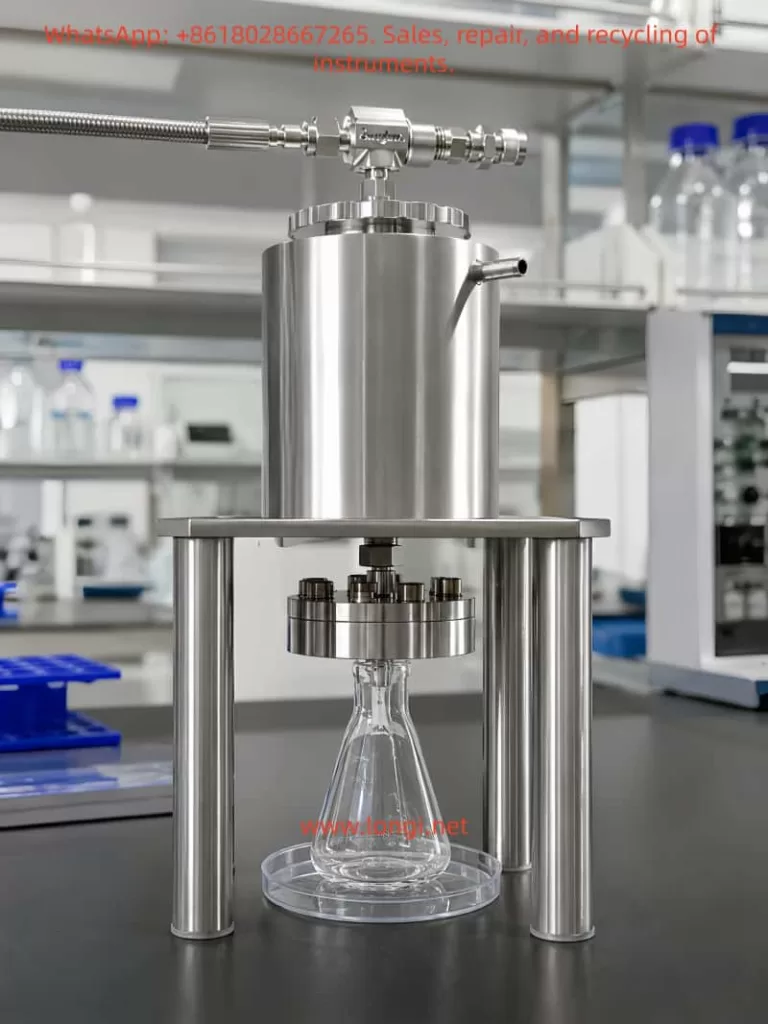
1. Overview of Avestin LiposoFast™ LF-1 Liposome Extruder
The LiposoFast™ LF-1 is manufactured by Avestin Inc., Canada, a company specializing in laboratory-scale and industrial-scale equipment for nanomaterial processing, liposome preparation, and high-pressure homogenization.
The LF-1 belongs to the category of manual small-volume liposome extruders.
Its main purpose is:
- Reducing liposome particle size;
- Narrowing particle size distribution;
- Improving sample consistency;
- Preparing laboratory-scale liposome formulations.
The system is designed for applications where only a small quantity of sample is available.
The standard operating range is approximately:
0.1 mL to 1.0 mL sample volume
This makes it suitable for:
- Early-stage pharmaceutical research;
- Formulation optimization;
- Drug delivery experiments;
- Nanoparticle development;
- Biological membrane studies.
The official manual describes the LiposoFast-Basic system as consisting of a stainless-steel housing, membrane support system, two gas-tight syringes, and polycarbonate membranes.
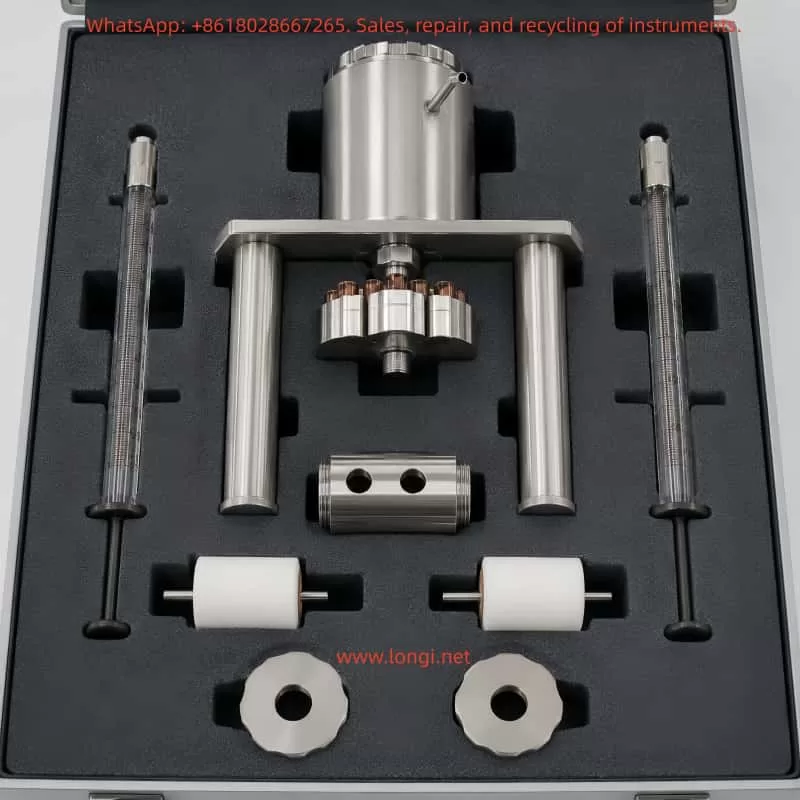
2. Working Principle of Liposome Extrusion Technology
2.1 Why Liposome Extrusion Is Necessary
During conventional liposome preparation, phospholipids are usually dissolved in an organic solvent and then converted into a lipid film. After hydration with an aqueous solution, multilamellar liposomes are formed.
These initial liposomes typically have:
- Large particle size;
- Irregular size distribution;
- Multiple lipid layers;
- Different structural properties.
For many applications, especially pharmaceutical applications, uniform particle size is required.
Extrusion provides a mechanical method to control liposome size.
2.2 Extrusion Process Principle
The LF-1 works by forcing liposome suspension through a membrane with precisely controlled pore size.
The basic process is:
Liposome suspension

        ↓

Gas-tight syringe pressure

        ↓

Membrane support assembly

        ↓

Polycarbonate membrane pores

        ↓

Particle size reduction

        ↓

Uniform liposome population
When the liposome suspension passes through the membrane:
- Larger vesicles are mechanically compressed;
- Vesicle structures reorganize;
- Large multilamellar vesicles gradually become smaller;
- Particle size distribution becomes narrower.
The membrane pore diameter directly influences the final liposome size.
3. Main Structural Components of LiposoFast™ LF-1
The LF-1 is a mechanically simple device, but each component plays an important role in ensuring reliable extrusion performance.
3.1 Stainless Steel Extrusion Housing
The central stainless-steel body is the pressure chamber of the system.
Its functions include:
- Holding the membrane assembly;
- Maintaining mechanical stability;
- Providing fluid sealing;
- Supporting repeated extrusion cycles.
The stainless-steel construction provides:
- High mechanical strength;
- Corrosion resistance;
- Easy cleaning;
- Compatibility with laboratory environments.
The housing contains the membrane support assembly and provides connection points for the syringes.
3.2 Membrane Support Assembly
The membrane support assembly is responsible for positioning the polycarbonate membrane correctly.
The membrane must remain:
- Flat;
- Centered;
- Properly sealed.
Incorrect membrane positioning can result in:
- Leakage;
- Reduced extrusion efficiency;
- Uneven particle size reduction.
The LF-1 design allows the operator to visually confirm membrane positioning through the inspection opening.
3.3 Polycarbonate Membrane
The polycarbonate membrane is the most important consumable component.
Different pore sizes are available depending on the desired liposome diameter.
Typical available membrane sizes include:
- 50 nm;
- 100 nm;
- 200 nm;
- 400 nm;
- 800 nm;
- 1000 nm;
- 5000 nm.
100 nm Membrane
The 100 nm membrane is the standard configuration.
It is commonly used for:
- General liposome preparation;
- Drug delivery research;
- Nanoparticle formulation.
50 nm Membrane
Used when smaller liposomes are required.
Advantages:
- Smaller particle size.
Disadvantages:
- Higher extrusion resistance;
- More difficult operation.
Larger Membranes
Larger pore sizes are used for:
- Initial size reduction;
- Large vesicle preparation;
- Specific experimental requirements.
3.4 Gas-Tight Syringes
The LF-1 uses precision gas-tight syringes.
Their purpose is:
- Maintaining accurate sample transfer;
- Minimizing dead volume;
- Providing consistent extrusion pressure.
The syringe connection uses a Luer lock interface.
Avestin recommends avoiding excessive tightening because the plastic Luer lock connection may be damaged. Metal Luer locks are not recommended because they may introduce metallic particle contamination.
3.5 O-Ring Sealing System
The O-ring system ensures that the entire sample passes through the membrane.
The correct assembly is:
End cap

↓

O-ring

↓

Polycarbonate membrane

↓

O-ring

↓

End cap
The membrane must be firmly pressed between two O-rings.
However, excessive tightening should be avoided.
Over-tightening may cause:
- Membrane damage;
- Support component deformation;
- Mechanical failure.
4. Standard Operating Procedure for LiposoFast™ LF-1
Step 1: Cleaning Before Operation
Before use:
- Disassemble the extrusion components;
- Clean all parts with alcohol;
- Remove any previous sample residue.
The LF-1 can also be autoclaved when appropriate.
Proper cleaning is critical because lipid residues can easily accumulate on:
- Membrane surfaces;
- O-rings;
- Fluid channels.
Step 2: Installing the Membrane
Installation procedure:
- Insert one membrane support component into the stainless-steel housing;
- Ensure the O-ring side faces outward;
- Place the polycarbonate membrane on the O-ring;
- Install the second support component.
The membrane must be centered.
Incorrect installation may result in:
- Leakage;
- Poor extrusion performance;
- Sample loss.
Step 3: Tightening the End Caps
Install both end caps manually.
The correct approach:
- Tighten until secure;
- Do not apply excessive force.
The goal is:
A reliable seal, not maximum mechanical compression.
Step 4: Preparing Liposome Sample
Before extrusion, multilamellar liposomes are usually prepared.
Typical preparation process:
- Dissolve phospholipids in an organic solvent;
- Remove solvent using rotary evaporation;
- Form a lipid film;
- Hydrate the film with aqueous solution;
- Shake mechanically or manually.
This produces multilamellar liposome suspension.
Step 5: Connecting Syringes
Procedure:
- Fill one syringe with liposome suspension;
- Connect it to one side of the membrane holder;
- Connect an empty syringe to the opposite side.
The sample should move between two syringes through the membrane.
Step 6: Performing Extrusion Cycles
The operator manually pushes the sample:
Syringe A

↓

Membrane

↓

Syringe B


Then reverse direction:


Syringe B

↓

Membrane

↓

Syringe A
This back-and-forth movement is repeated.
Normally:
11–21 passes
are sufficient.
The exact number depends on:
- Lipid composition;
- Initial particle size;
- Desired final size.
5. Important Experimental Considerations
5.1 Temperature Control
Liposome properties are temperature-sensitive.
Some lipid formulations require extrusion above their phase transition temperature.
The LF-1 and stabilizer can be immersed in a temperature-controlled water bath.
Temperature control helps:
- Reduce viscosity;
- Improve extrusion efficiency;
- Maintain membrane structure.
5.2 Avoiding Excessive Pressure
If pushing becomes extremely difficult:
Possible causes:
- Membrane pore size too small;
- Sample viscosity too high;
- Membrane blockage.
Do not force the syringe aggressively.
Excessive mechanical force may damage:
- Syringe seals;
- Luer connections;
- Membrane assembly.
6. Common Problems and Troubleshooting
Problem 1: Leakage During Extrusion
Possible causes:
Damaged O-ring
Solution:
Replace O-ring.
Incorrect membrane installation
Solution:
Reinstall membrane and check alignment.
Insufficient sealing
Solution:
Slightly tighten end caps.
Avoid over-tightening.
Problem 2: Extrusion Is Too Difficult
Possible causes:
Wrong membrane selection
A smaller pore membrane creates higher resistance.
Solution:
Use a larger pore membrane first.
High sample concentration
High lipid concentration increases viscosity.
Solution:
Optimize formulation.
Blocked membrane
Solution:
Replace membrane.
Problem 3: Poor Particle Size Uniformity
Possible causes:
- Too few extrusion cycles;
- Incorrect membrane pore size;
- Poor initial liposome preparation.
Solutions:
- Increase extrusion passes;
- Select appropriate membrane;
- Improve sample preparation process.
7. Cleaning and Maintenance
Proper maintenance directly affects equipment lifetime.
After Each Use
Recommended procedures:
- Remove membrane;
- Wash all components;
- Clean with alcohol;
- Dry before storage.
O-Ring Maintenance
Inspect regularly for:
- Cracks;
- Hardening;
- Deformation.
A damaged O-ring may cause:
- Leakage;
- Pressure loss;
- Contamination.
Syringe Maintenance
Gas-tight syringes should be:
- Handled carefully;
- Protected from mechanical shock;
- Cleaned after use.
8. LiposoFast™ LF-1 Compared With LF-50
Avestin also produces the LiposoFast LF-50 system.
LiposoFast LF-1
Characteristics:
- Manual operation;
- 0.1–1 mL sample volume;
- Laboratory research application.
LiposoFast LF-50
Characteristics:
- Medium-pressure extrusion system;
- 5–50 mL sample volume;
- Uses compressed gas.
Maximum operating pressure:
Approximately:
600 psi / 41 bar.
LF-50 is more suitable for:
- Larger research batches;
- Process development.
9. Applications of LiposoFast™ LF-1
Pharmaceutical Research
Applications include:
- Drug delivery systems;
- Nano-carrier development;
- Controlled release formulations.
Vaccine Research
Liposomes can act as:
- Antigen carriers;
- Delivery platforms.
Cosmetics Development
Applications include:
- Encapsulation of active ingredients;
- Improved stability of formulations.
Biological Research
Used for:
- Artificial membrane models;
- Cell membrane studies;
- Nanobiotechnology experiments.
10. Conclusion
The Avestin LiposoFast™ LF-1 represents a reliable and widely used laboratory liposome extrusion system. Although the device has a simple mechanical design, achieving consistent results requires careful control of several important factors, including membrane selection, assembly accuracy, extrusion cycles, temperature, and maintenance.
The most important operating principles include:
- Correct installation of the polycarbonate membrane;
- Proper sealing using O-rings;
- Selection of suitable membrane pore size;
- Performing sufficient extrusion cycles;
- Avoiding excessive mechanical force;
- Maintaining clean and functional components.
For laboratories involved in liposome formulation development, nanomedicine research, and pharmaceutical innovation, the LiposoFast™ LF-1 provides an efficient and practical solution for producing uniform liposome preparations at small scale.
With correct operation and regular maintenance, this compact extrusion system can provide stable performance and highly reproducible experimental results for many years.
Picture 1
Image description:
Avestin LiposoFast™ LF-1 liposome extruder assembled on a laboratory support stand, showing the stainless-steel extrusion chamber, syringe connections, and experimental setup.
ALT Text:
Avestin LiposoFast LF-1 liposome extruder assembled with stainless steel extrusion chamber, support stand and laboratory syringe system for nanoparticle preparation.
Picture 2
Image description:
Disassembled Avestin LiposoFast™ LF-1 components displayed in a protective case, including stainless-steel housing, membrane supports, polycarbonate membranes, O-rings, and gas-tight syringes.
ALT Text:
Avestin LiposoFast LF-1 liposome extruder components including stainless steel housing, membrane holder, polycarbonate membranes, O-rings and gas-tight syringes.