Posted on

In-Depth Technical Analysis and Engineering Handling Guide for SINAMICS G120 Alarm F30005 (Power Unit Overload)

I. Fault Background and Positioning Principles

In the Siemens SINAMICS G120 series variable frequency drive system, the fault code F30005 – Power unit overload falls within the range of 30000–30999 and is clearly attributed to the DRIVE-CLiQ power unit (Power Module, PM) itself, rather than the control unit (CU) or the external communication layer. This fault code indicates that the power module has internally determined that its operating state has exceeded the safe operating boundaries, and does not simply refer to motor overload or a load current exceeding the nameplate value.
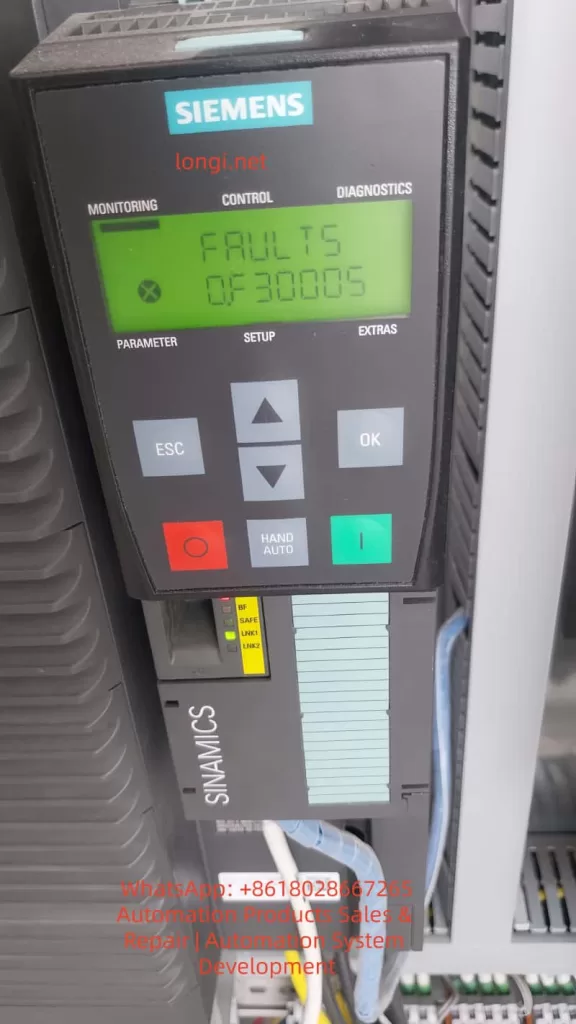
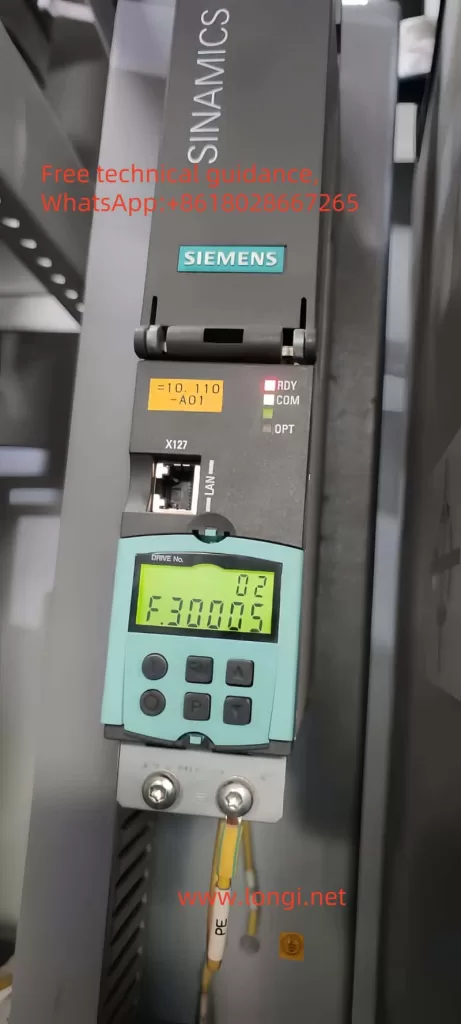
faults 0.F30005

II. The True Meaning of “Power Unit Overload” in SINAMICS G120

1. Siemens’ Engineering Definition of “Overload”

In the SINAMICS system, “Power Unit Overload” is not a simple I²t overload protection but the result of a multi-dimensional comprehensive assessment, including power device (IGBT) junction temperature models, heat sink temperature rise models, output current time integrals (equivalent thermal loads), abnormal DC bus energy flows, and the coupling effects of switching losses and carrier frequencies. F30005 is the final outcome of a thermal model mismatch or stress overrun in the power module.

2. Relationship with the F3xxxx Coding System

The range 30000–30999 clearly points to the DRIVE-CLiQ power unit, with F30005 being a typical representative within this range. This means that the fault source lies in power modules such as the PM240/PM240-2/PM250, with the CU only responsible for forwarding the fault information. DRIVE-CLiQ communication serves as an information channel and is not the root cause of the fault.

III. Typical Trigger Scenarios for F30005

Scenario 1: Long-Term Operation in the “Hidden Overload Zone” of the Power Module

The operating current does not exceed the rated value, but prolonged operation, high ambient temperatures, and inadequate cabinet ventilation design lead to continuous accumulation in the IGBT junction temperature model, ultimately triggering F30005. This is a thermal design issue, not a parameter issue.

Scenario 2: Low-Speed, High-Torque Operating Conditions

In low-frequency (<10 Hz), high-torque maintenance, vector control/DTC modes, prolonged “holding still” results in a significant increase in IGBT conduction losses, reduced fan speed, decreased cooling capacity, and a thermal model accumulation rate that far exceeds expectations.

Scenario 3: Improper Matching Between the Power Module and the Motor

If the PM power selection is too small, the motor’s rated current is close to the PM’s upper limit, the actual load torque exceeds the design value, or high-inertia mechanical systems are used, the power module will alarm even if the parameters “appear to be fine.”

Scenario 4: Improper Carrier Frequency Settings

Setting the carrier frequency too high (e.g., 8–12 kHz) in pursuit of low noise, combined with high power, leads to increased IGBT switching losses, rising module heat generation, and ultimately triggers F30005.

IV. Why “Restarting Works for a While,” but the Fault Recurs?

The thermal model is reset upon power-off, and the actual IGBT junction temperature drops, temporarily restoring the system’s “safety margin.” However, as long as the operating conditions, cooling conditions, and parameters remain unchanged, the thermal model will accumulate again, and the fault will inevitably reoccur.
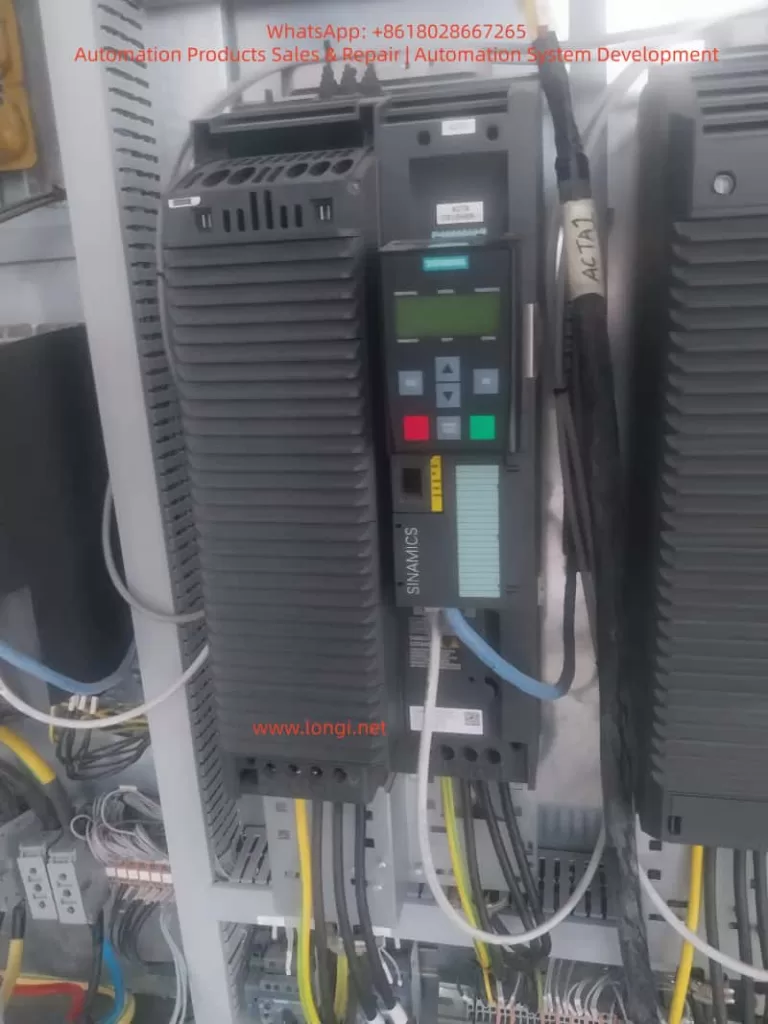
G120 drive

V. The Fundamental Differences Between F30005 and “Motor Overload”

Comparison ItemMotor OverloadF30005
Monitoring ObjectMotorPower Module
Judgment BasisCurrent/I²tThermal Model + Energy
Must Have High CurrentYesNot Necessarily
Short-Term RecoverabilityLimitedObvious
Root CauseMechanical or LoadElectrical + Thermal

VI. Engineering-Level Troubleshooting Process

Step 1: Confirm the Power Module Model and Rated Capacity

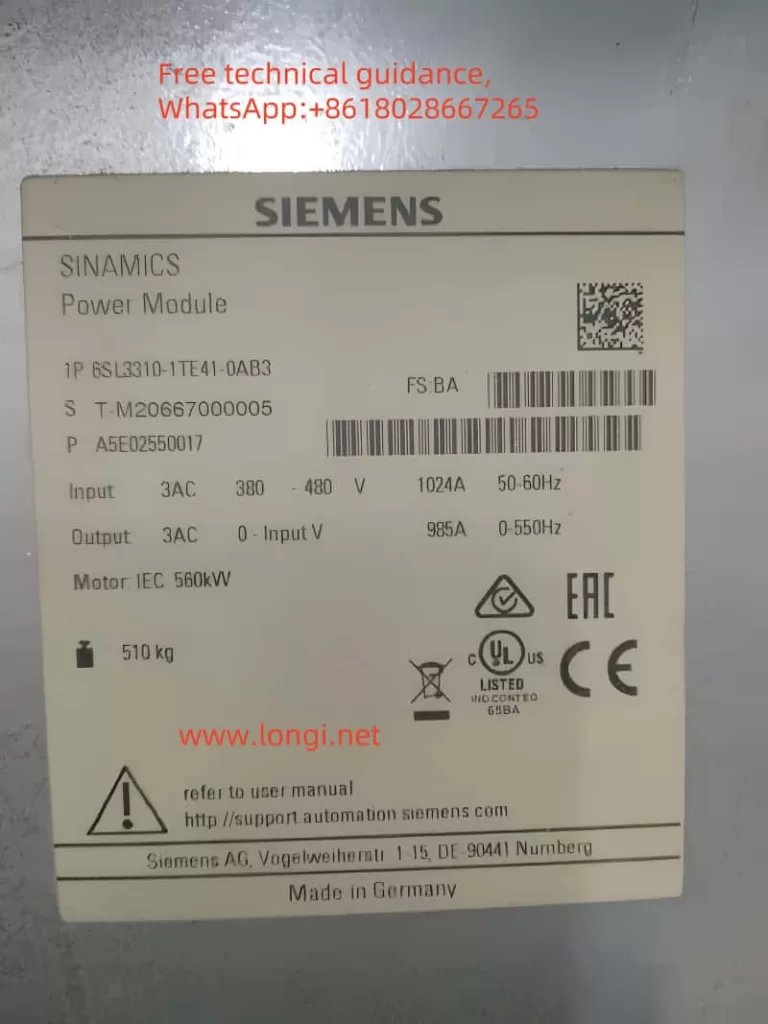
Check the model and current rating of power modules such as the PM240/PM240-2/PM250 to confirm whether they are operating close to or exceeding 80% of their long-term capacity. Insufficient power module selection is a common cause.

Step 2: Inspect Cabinet Cooling and Environmental Conditions

Focus on the cabinet temperature, whether the air duct is blocked by cables, and whether the PM fan is aged or dusty.

Step 3: Analyze Operating Conditions

Confirm whether there is long-term low-speed, heavy-load operation, frequent starting/stopping, or accumulation of DC braking or regenerative energy.

Step 4: Review Carrier Frequency and Control Modes

Check whether thermal margins have been sacrificed for “quietness” and whether unnecessary high-performance control modes are being used.

VII. Sustainable Solutions

✔ Correct Approaches

  • Reduce the carrier frequency to decrease IGBT switching losses.
  • Optimize the process operating curve to avoid prolonged low-speed, heavy-load operation.
  • Improve cooling conditions, such as clearing air ducts and replacing aged fans.
  • Upgrade the power module rating if necessary to increase system redundancy.

✘ Incorrect Practices

  • Repeatedly resetting the system while ignoring the root cause.
  • Blindly increasing overload parameters to mask the fault.
  • Ignoring cabinet thermal design, leading to recurring issues.
  • Shifting the blame to the motor, delaying repair timing.

VIII. Conclusion: F30005 is the “Power Module’s Self-Preservation Mechanism”

F30005 is not bad news but a clear indication from the power module that the current system’s thermal-electrical-mechanical balance has been disrupted. Ignoring it may lead to permanent IGBT damage, drive failure, and costs far exceeding those of a reasonable rectification. Therefore, F30005 faults should be taken seriously, and timely troubleshooting and resolution should be carried out.
Posted on

Analysis and Solutions for Faults F30005 and F30025 in Siemens G130_G150 Series Frequency Converters

Introduction

Siemens G130 and G150 series frequency converters play a crucial role in industrial automation systems, and their stability and reliability are vital for the smooth operation of production processes. However, in practical applications, these converters may encounter various faults, with F30005 (overload) and F30025 (overheating) being two of the most common ones. This article aims to provide an in-depth analysis of the meanings and causes of these faults and offer corresponding solutions. Additionally, a practical maintenance case is presented to illustrate the complexity of fault handling and the strategies employed.

G130 physical picture

Fault Analysis

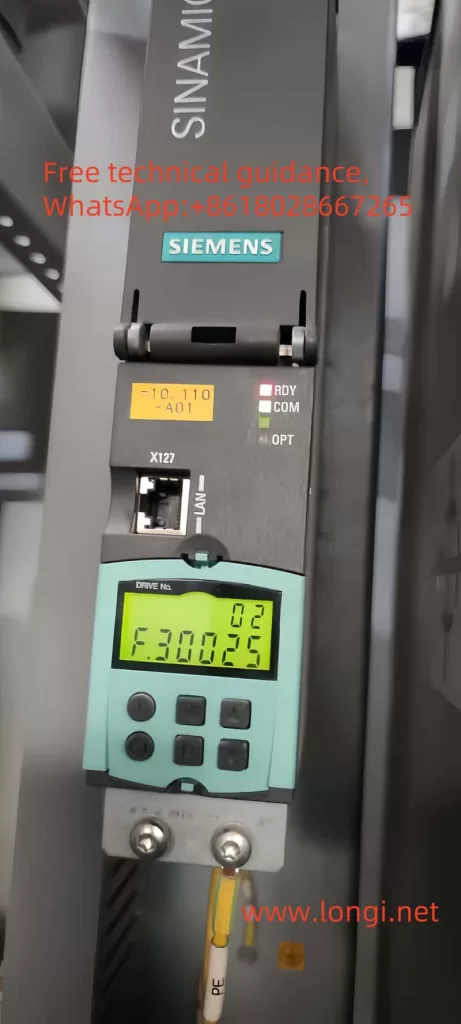
F30025 (Overheating)

The F30025 fault typically indicates that the power unit’s chip temperature is too high. This fault can be caused by various factors, including but not limited to:

  • Poor Heat Dissipation: Issues such as fan failure, obstructed ventilation, or excessively high ambient temperatures can prevent the power unit from effectively dissipating heat.
  • Overload Operation: Prolonged high-load operation generates significant heat within the power unit.
  • High Pulse Frequency: Operating at high frequencies increases the heat generation in the power unit.
fault F30025

F30005 (Overload)

The F30005 fault signifies an I2t overload in the power unit. Possible causes include:

  • Excessive Load: The motor or mechanical load exceeds the rated power of the frequency converter.
  • Unreasonable Operating Cycle: Continuous operation without sufficient cooling time for the frequency converter.
  • Improper Parameter Settings: Inappropriate settings for parameters such as acceleration and deceleration times, leading to excessive output current from the frequency converter.

Additionally, faults like overcurrent (F30001) and grounding (F30021) are also closely related to current detection and judgment, indicating output currents exceeding rated values and insulation damage to motors or cables, respectively.

FAULT F30005

Mechanisms of Fault Occurrence

Faults Occurring at Power-On

Faults that occur immediately upon power-on often point to hardware issues, such as damaged current sensors (transformers) or related detection circuit problems. These faults typically manifest as errors as soon as power is applied and are difficult to resolve through parameter adjustments.

Faults Occurring During Operation

Faults that arise during operation may be the result of a combination of factors, including load variations, ambient temperatures, and ventilation conditions. Such faults are usually addressed by optimizing parameters, reducing load rates, and improving ventilation conditions.

G130 internal physical image

Solutions

Optimizing Parameter Adjustments

  • Adjust Operating Cycles: Arrange the working and rest times of the frequency converter reasonably to avoid prolonged continuous operation.
  • Adjust Acceleration/Deceleration Times: Modify acceleration and deceleration times based on load characteristics to reduce the impact on the frequency converter.
  • Increase Preset Values for Electronic Thermal Protection: If the motor and frequency converter are not overloaded, the preset values for electronic thermal protection can be appropriately increased.

Reducing Load Rates

  • Check and Optimize Mechanical Loads: Ensure that mechanical loads operate within the rated power range of the frequency converter.
  • Adjust Gear Ratios: Where possible, adjust gear ratios to reduce the load on the motor axis.

Ensuring Adequate Ventilation

  • Regularly Clean Heat Sinks: Ensure that heat sink fins are free of dust and that fans are operating normally.
  • Improve Ventilation Conditions: Ensure that the frequency converter is installed in a well-ventilated location, away from direct sunlight and high-temperature environments.
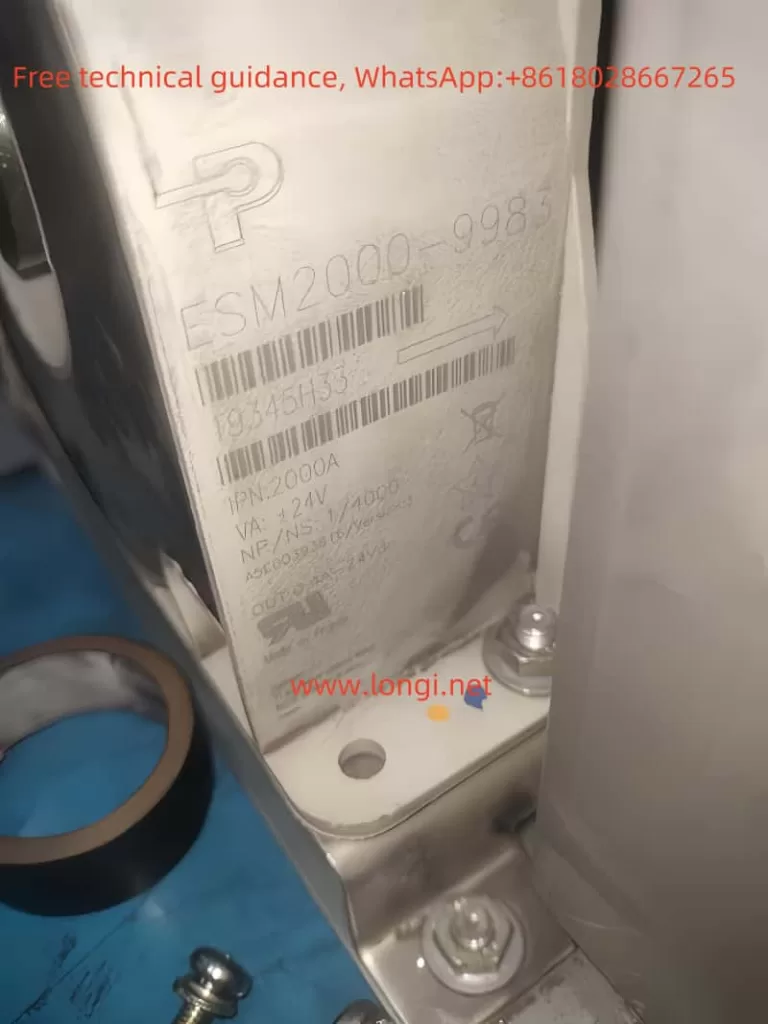
ESM2000-9983

Fault Repair

Handling Faulty Current Sensors

  • Check Current Sensors: Use a multimeter to test the output of the current sensors for normality.
  • Replace Damaged Current Sensors: If a sensor is confirmed to be damaged, it should be promptly replaced with a compatible model.
  • Adopt Temporary Solutions: In emergencies, if only two current sensors are available, the frequency converter can be set to V/F control mode, but risks should be noted.

Repairing Drive Boards

  • Check Optocouplers on Drive Boards: Optocouplers are key components for detecting the voltage drop across switching transistors and should be replaced if damaged.
  • Rewire or Replace Faulty Components: If other components (such as resistors, capacitors) on the drive board are damaged, they should be rewired or replaced.

Checking Current Detection Circuits

  • Trace Current Signal Paths: From the current sensors to the frequency converter’s control circuit, gradually check each component along the signal path.
  • Use Oscilloscopes to Detect Signal Waveforms: Observe the waveforms of current signals through an oscilloscope to identify any abnormalities.
  • Repair or Replace Faulty Components: Based on the detection results, repair or replace faulty components.
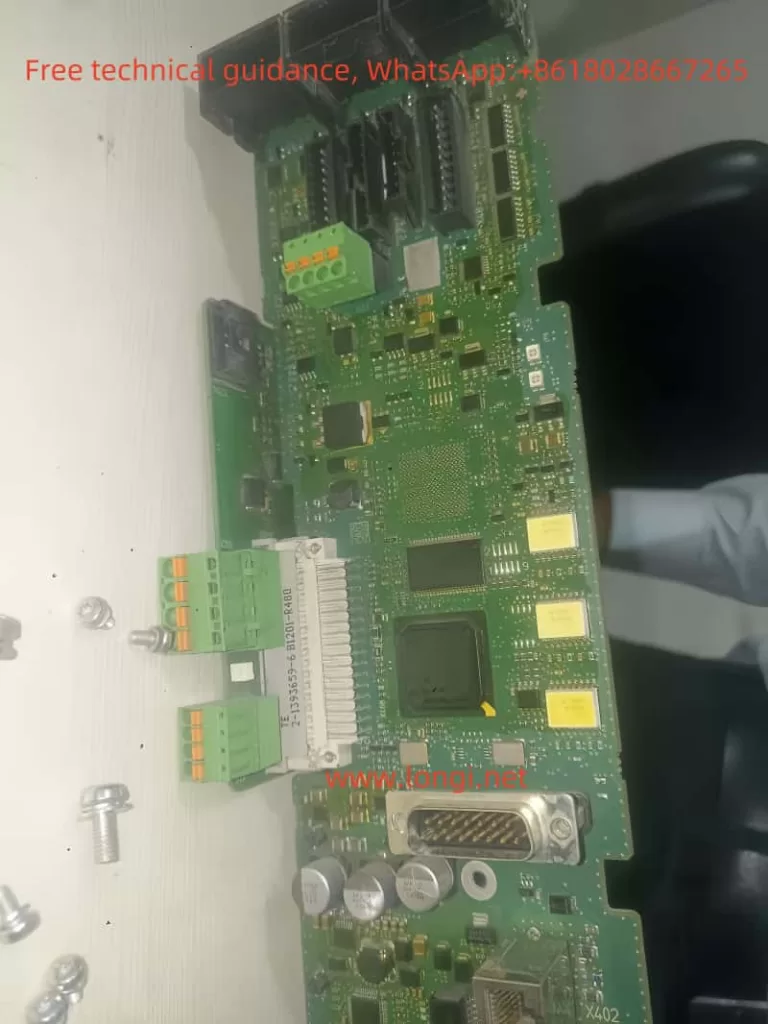
G130 CPU board

Practical Maintenance Case

In actual maintenance, we encountered a typical case that fully demonstrated the complexity of concurrent F30005 and F30025 faults and their solutions. The frequency converter immediately displayed an F30025 fault upon power-on, and further operation (such as pressing the ↓ key) revealed an F30005 fault, indicating simultaneous issues of overheating and overload.

Upon thorough inspection, it was found that the root cause was a damaged current sensor. This frequency converter utilized three ESM2000-9922 current sensors, each with a maximum secondary side output current of 400mA, collectively responsible for monitoring the three-phase current output of the converter. According to Kirchhoff’s Current Law, the sum of currents entering a node at any moment should equal the sum of currents exiting the node. In a three-phase system, this means that the algebraic sum of any two phase currents must equal the negative of the third phase current. Therefore, theoretically, as long as two current sensors are functioning normally, the reading of the third sensor can be inferred from their data.

However, this substitution scheme carries risks in practical operation, requiring that the three-phase currents and voltages output by the frequency converter remain relatively balanced and that the angle between the currents is close to the ideal 120°. Furthermore, since this frequency converter supports vector control, precise current measurement is crucial. Therefore, when adopting this temporary substitution scheme, we had to switch the converter’s operating mode from vector control to V/F control to avoid damaging the IGBT module due to inaccurate current calculations.

During the specific operation, we removed the damaged current sensor and reconnected the remaining two sensors. Then, through the frequency converter’s parameter setting interface, we changed its operating mode to V/F control. After these steps, although the frequency converter could be started and operated, the current values displayed on the screen were slightly lower than the actual values. In emergencies, this makeshift solution can temporarily restore the functionality of the frequency converter and ensure the continuity of the production process. However, in the long run, we still recommend replacing the damaged current sensor as soon as possible and restoring the frequency converter to its original vector control mode to ensure its performance and accuracy.

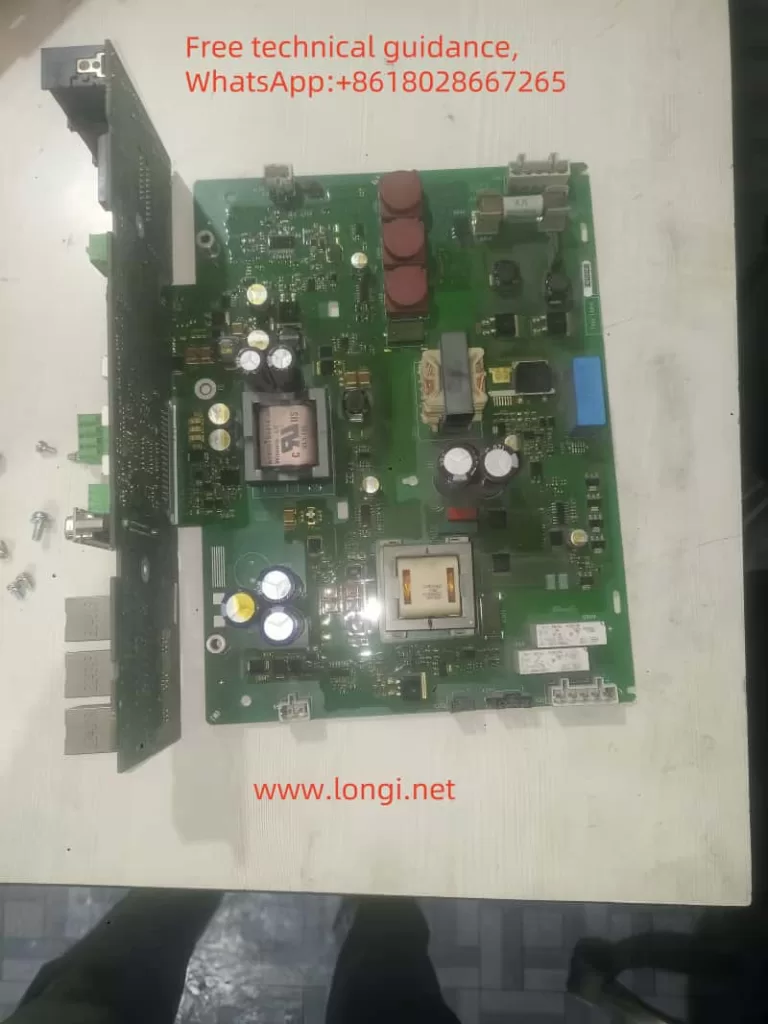
G130 power board

Conclusion

Although F30005 and F30025 faults are common in Siemens G130 and G150 series frequency converters, they can be effectively prevented and resolved through reasonable parameter adjustments, load reduction, improved ventilation conditions, and prompt fault repairs. In practical applications, targeted measures should be taken based on specific situations to ensure the stable operation of the frequency converters. Meanwhile, through meticulous inspections and flexible strategies, we can identify the key to solving problems and ensure the long-term reliable operation of the equipment.