
Introduction
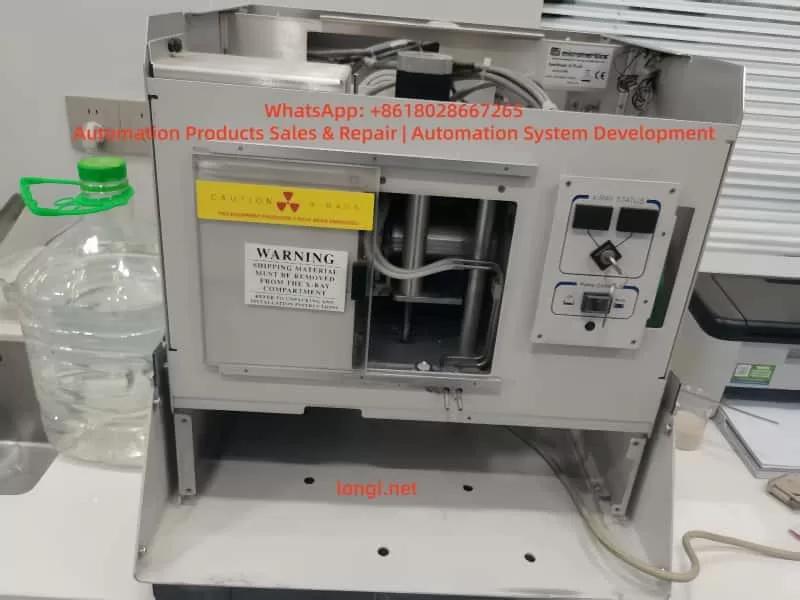
The Micromeritics Sedigraph 525 is a widely used X-ray sedimentation analyzer for particle size measurement. One of the most critical components inside this system is the high voltage power supply module, typically the SCR-15P/24.
When this module fails, the system loses its X-ray generation capability, leading to complete operational shutdown.
However, replacing this module is not straightforward. Many engineers assume that any 24V to 1500V DC high voltage module can serve as a replacement. In reality, this assumption can lead to unstable operation, incorrect measurements, or even further damage.
This article provides a comprehensive engineering guide to understanding, diagnosing, and replacing the SCR-15P/24 high voltage power supply.
What is SCR-15P/24 High Voltage Module?
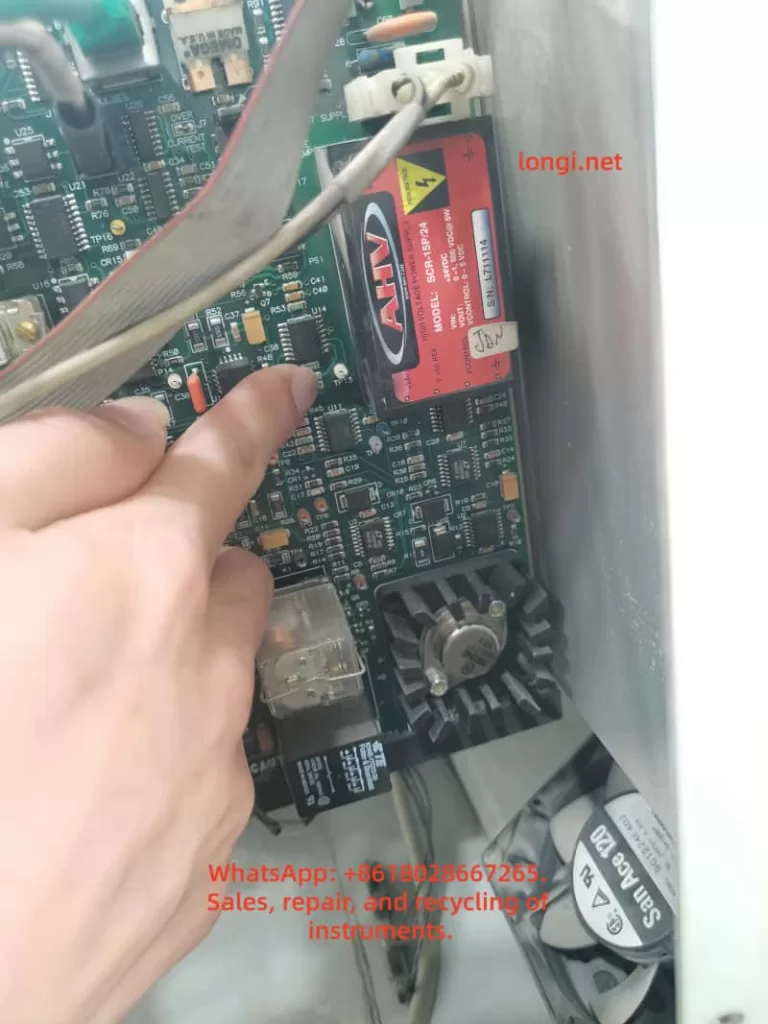
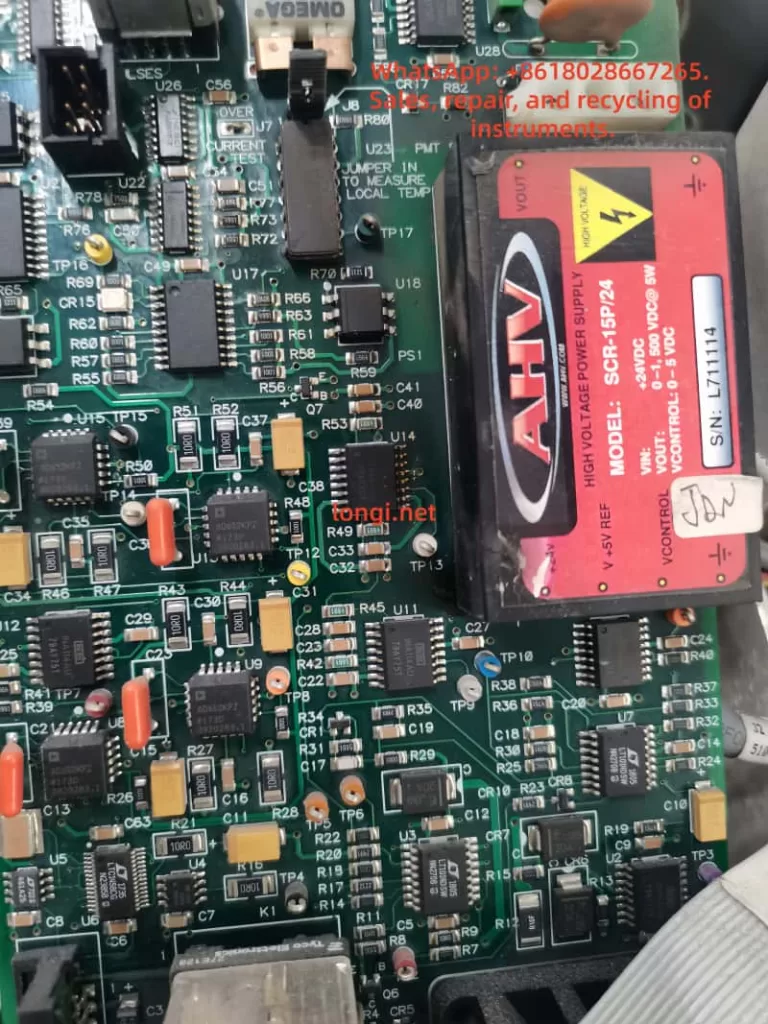
The SCR-15P/24 is an industrial-grade regulated high voltage DC power supply designed for precision applications such as X-ray systems.
Key Specifications:
- Input Voltage: 24VDC
- Output Voltage: 0–1500VDC (adjustable)
- Control Signal: 0–5V analog control
- Output Polarity: Positive high voltage
- Power Rating: Approx. 5W
- Output Type: Regulated DC high voltage
Unlike simple DC-DC converters, this module provides controlled and stable high voltage output.
Is the Output Pulse or DC?
A common question is whether the output of SCR-15P/24 is pulse-based or continuous.
The answer:
- Internally: High-frequency switching (PWM-based)
- Output: Stable DC high voltage with low ripple
This means:
- It behaves as a DC source for the system
- It is not a pulsed HV generator
- Ripple is minimal and controlled
This distinction is critical for X-ray applications.
Why High Voltage Stability Matters in X-ray Systems
The Sedigraph 525 relies on X-ray attenuation to determine particle size distribution. The accuracy of measurement depends heavily on voltage stability.
Key Requirements:
1. Voltage Stability
- Small fluctuations → large measurement errors
- Must maintain constant HV output
2. Low Ripple
- Noise affects detector readings
- Industrial HV modules maintain <1% ripple
3. Linear Control Response
- Output voltage must follow control signal (0–5V)
- Required for calibration and operation
4. Electrical Isolation
- High insulation resistance
- Floating output for safety
Why You Cannot Use Generic 24V to 1500V Modules
Many low-cost high voltage DC-DC modules available online claim:
- 24V input
- 1500V output
However, these modules typically fail in real applications.
Common Issues:
No Control Interface
- Cannot accept 0–5V control signal
- Only fixed output or manual adjustment
High Ripple
- Not suitable for measurement systems
No Feedback Loop
- Output unstable under load
Unknown Specifications
- No datasheet
- No reliability guarantee
Conclusion:
These modules are boost converters, not regulated high voltage power supplies.
Requirements for SCR-15P/24 Replacement
To properly replace the original module, the alternative must meet strict criteria.
Mandatory Parameters:
| Parameter | Requirement |
|---|---|
| Input Voltage | 24VDC |
| Output Voltage | 0–1500V adjustable |
| Control | 0–5V analog input |
| Output Type | Regulated DC |
| Power | ≥5W |
| Polarity | Positive HV |
Recommended Replacement Options
1. Original Module Repair (Best Option)
Advantages:
- Full compatibility
- Lowest cost
- No modification required
Typical failures include:
- Internal HV breakdown
- Switching transistor damage
- Control circuit failure
2. Industrial Equivalent Modules
Recommended brands:
- Analog Technologies
- XP Power / EMCO
- AHV alternative series
Advantages:
- Industrial-grade reliability
- Proper control interface
- Low ripple output
3. Custom High Voltage Module
Many manufacturers can provide:
- 24V input
- 0–1500V adjustable output
- Custom control interface
Advantages:
- Fully compatible solution
- Lower cost than OEM
Key Engineering Considerations for Replacement
Control Signal Matching
Ensure:
- Input control voltage range matches system
- Linear response between control and output
Electrical Interface
Verify:
- Pin configuration
- Reference voltage
- Enable/disable signals
High Voltage Layout
Pay attention to:
- Insulation distance
- Grounding strategy
- Shielding
Thermal Management
High voltage modules generate heat:
- Ensure proper cooling
- Avoid enclosed overheating
Field Diagnosis Procedure
Follow these steps to confirm HV module failure:
Step 1: Check Input Voltage
- Confirm 24V supply
Step 2: Check Control Signal
- Measure 0–5V control input
Step 3: Measure HV Output
- No output → module failure
Practical Recommendation
Instead of searching for an exact SCR-15P/24 replacement, focus on:
👉 Functional equivalence
This includes:
- Same voltage range
- Same control method
- Same stability level
Conclusion
The SCR-15P/24 is not a simple DC-DC converter but a regulated high voltage power supply designed for precision X-ray systems.
Replacing it requires careful consideration of:
- Control compatibility
- Output stability
- Electrical interface
Using generic high voltage modules is not recommended for real applications.
Final Summary
High voltage replacement is not about matching voltage. It is about matching system behavior.